Showing posts with label Collecting. Show all posts

Getting Started With Antique Watches

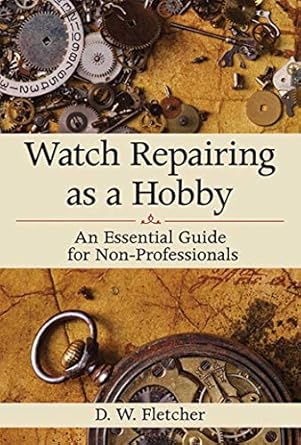
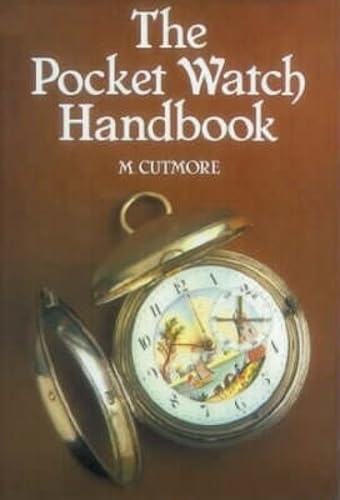
I am frequently asked about books and other resources useful in learning about collecting, and repairing, pocketwatches, and vintages watches in general.  There are several good ones.


These three provide a good deal of information on the history of watches as well as about their care and use. These are a great place to start with the basics.


How much is your watch worth? This book is the place to look. This is a very widely used price guide that also contains quite a bit of general information on vintage watches, watch terminology, history and more. This book are great as general reference.


Practical Watch Repairing by Donald de Carle is a reprint of a classic instructional book on watchmaking.  Some of it is dated, some but most techniques are basically the same today.


Also by de Carle is Practical Watch Adjusting.
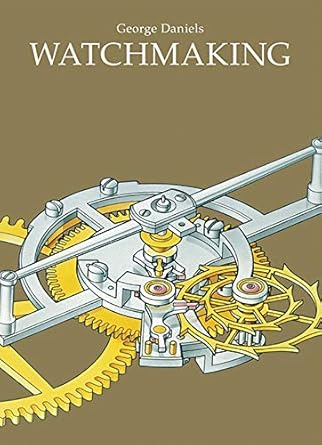


For even more technical information, there's this one by master craftsman George Daniels. This book is the gold standard on how to construct a watch from scratch.

This is not a definitive list, just a few I have seen. There are also many old and out of print books on watchmaking. Regularly checking used book stores and eBay will turn up a more. Old books often contain hard to find information on specialized antique tools and certain repair techniques.

Here are a few online resources:
You can also find many posts about watchmaking, new and old, right here on this blog, and still more in this Collection, here.

Finally, here's a few sources of watch material, specialty services, tools, books, supplies, and more:
Of course you can also find quite a lot on eBay too, including old and out of print books, hard to find tools and watch parts.

Collecting, or repair, antique timepieces make for a fascinating and rewarding hobby, enjoy!


Is Your Watch Railroad Grade?

Term "railroad watch" or "railroad grade" can mean a lot of things. First, since railroad workers bought their own watches, in theory any watch might have been used on a railroad and so might be a "railroad watch".

The history of these terms is different from what people may think. Railroads had approved watches for use. At first these were lists of specific watches, and later they became lists of features and characteristics a watch must have. Each railroad had it's own standards, and they changed over the years. Information on what was approved does not survive to this day for all railroads.

Timekeeping an railroads became a front and center issue in 1891. A particularly violent head-on crash between two trains, Lake Shore and Michigan Southern, occurred near Kipton, Ohio. The crash was blamed on a failure to have the correct time. A mail train was coming through and, although the engineer thought he was at at the crossing at the correct time, he was in fact, four minutes late. Six postal clerks and two engineers were killed.

The Lake Shore and Michigan Southern Railroad called on Webb C. Ball, a Cleveland jeweler, to investigate time keeping issues on the rail lines. Ball was tasked to establish standards for railroad watches and create regular inspection system with careful record keeping for each individual timepiece in use on the railroad.

As an aside, my Grandfather briefly worked as a railroad watch inspector. As another aside, this is how the expression "on the ball" came into use, as a way of saying "on correct time."

Anyway, once these standards were created, watch manufacturers began designing watches specifically for railroad use. Watch manufacturers also figured out quickly that the public was aware of all this and that associating their product with railroading sold more watches. They put pictures of steam engines on dials and cases, used railroad style markings and hands, and started talking about "railroad grade". But this claim didn't necessarily have anything to do with whether or not a specific railroad had approved a given watch that given year. As today when a pickup truck is labeled by a car maker "heavy duty", the term can be arbitrary.

In general though, broadly speaking, railroads approved watches that had characteristics like being open-face, with Arabic markings, at least 19 jewels, at least 16 size, and lever-set. Or as I say, early on, railroads created lists of specific approved watches. Earlier standards were stricter, like only 18 size, and only 21 jewels. As watches got better the standards got broader.

Here is one specific list. In 1890, at a watch inspectors convention it was determined that watches for use on railroads be adjusted to five positions and temperature, have a double roller, be lever set, wind at 12 and have a plain Arabic dial.  12 size were not acceptable. The following watches were agreed upon.

Waltham's Vangard 23 jewel, Crescent St., 21 jewel and Riverside, 19 jewel.
Elgin's Veritas, 23 jewel, Father Time, 21 jewel, and B. W. Raymod, 19 jewel.
Hamiton's No 950, 23 jewel, No. 992, 21 jewel and No. 996, 19 jewel.
Illinios's Sangamo Special 23 jewel, Bunn Special 21 jewel and Bunn 19 jewel.
Hampden's Special Railway 23 jewel, New Railway 21 jewel and Railway 19 jewel.
South Bend's Special Railway 21 jewel, No. 227.
Haward's 23 jewel, 21 jewel and 19 jewel.
Ball Official Railroad Standard 23 jewel, Standard 21 jewel and Standard 19 jewel.

You can see examples of railroad grade watches, and read more, here.


FAQ - Will Part XYZ Work in My Watch?

Sometimes I get email from someone that has a watch with an obvious problem, and they ask if they can take a replacement part from another given watch, and will it be right? This is particularly common with a complete balance assembly since a broken balance staff is a very common issue, and it's not hard to tell that problem exists in a given broken watch. There's a few things to say about this...

First, you can look up what the old factory records say about part numbers for Elgin watches. But it is by the serial number of the exact movement, not the grade. The reason for this is that there are many instances where the part was changed during Elgin's production run of a grade, and some ranges of the serial numbers assigned to that grade use some different part.

You can look up a movement serial number here.

In the "Links" section there is an entry for parts. The resulting look up will give you much of the key part numbers for this watch.

If you do not know a serial number, you can look up an Elgin grade number here. On this page there are usually, but not always, links for specific serial numbers of known watches of that grade, and from there you can get to the parts section. Look in the "watches serviced by Jeff Sexton" or the "Notes" section for known private label watches. If there's no links available, you can still get to a representative movement. Click on any year in the "Production History" list. The next page has the specific serial number ranges, and these are clickable. It will take you to a page for the first number in that range.

This will get you to a representative movement, but again, keep in mind that the parts can vary by specific serial number.

But there are other issues. For example, if you find another grade that seems to take the same balance complete, it does not mean that you can be sure that a given balance complete will work in your watch. For one thing balance staffs from Elgin typically come in three pivot sizes. That has to match the holes sizes in the balance jewels you have. And there are often other "Q/A" issues. Elgin's replacement part system was extremely advanced, and they did a great job. But these are far from "drop in" parts just the same. Replacement parts often have to "fit" even if they are the "correct" original factory part - particularly balance staffs. I probably adjust a staff maybe one out of four times I replace one.

I have also seen many watches were other things have been altered to use a balance other than what the specs say it is supposed to have. They can even have come out of the factory that way. This can get really messy.

Thirdly, and especially regarding a broken balance staff, the broken part of the pivot is likely still inside there someplace. That tiny bit of hard steel is more than enough to cause other problems, stop the watch and even damage something else. The movement must be completely disassembled and cleaned to get it out.

Lastly, regardless of what trouble a movement has, a watch that has not been serviced in decades should be. Running a watch without cleaning is just like running a car without changing the oil. It may well "run fine", until it stops and damage is already done.


Shopping for a Pocketwatch - Part 4, Swing-out Cases

Here in part 4 of this series on tips for buying a first pocketwatch, we take a look at cases again, and case types. Mainly, it is worth mentioning swing-out cases.

There are many different designs of watch cases. But since we have focused here on American makes, that tends to narrow it down. Most watch cases are a type that opens at the front and the back, or they are swing-out cases.

Cases having a front and back that open are built in three sections; a middle ring that holds the movement and the stem, a solid back, and a front that carries the bezel and the crystal. On these cases the front and back parts may attach to the midsection in a variety of ways. Many are threaded, some snap on, and some are hinged to the middle ring. These may appear in any combination. Hunter cases are often this type, with the additional complication of the hinged front cover.

It is important to know what sort of case you have before trying to open it.


As much as opening the case all the time is not recommended (keep the dust out!), we know that watch owners are going to want the show off the movement every chance they get.  So, when shopping for a watch, an important thing to understand is the difference between the three-piece cases and swing-out cases, also sometimes called tip-out cases, mainly because swing-out cases are harder to open.

Swing-out cases have no removable back. Under close examination, one will find that there is no gap or seam around the case revealing that the back is a separate part. Only the front is removable on a typical swing-out case. And removing the front reveals a hinged loop that can be pulled and lifted from the bottom of the case. The movement is carried in this loop.

On most American pocketwatches, the winding arbor is part of the case and the female part is in the movement. So in order to lift the movement it is usually necessary to give the stem clearance by snapping out the crown. Even then it can be tricky. But the winding arbor will often have a little play and can be wiggled and turned to get the movement out. Swinging the movement back in and getting the arbor in place can be similarly tricky.

Swing-out cases have the advantage of being sturdier, having fewer parts with the one-piece body, and of being better at keeping out dust, having just the one seam, for the front. Many railroad watch specifications called for swing-out cases.

In the earlier parts of this series we arrived at a general recommendation of 12 or 16 size open-face Elgin watches as being a good choice for a first pocketwatch. The majority of these are found in some form or other of a three-piece case. Swing-out cases are slightly more common with 18 size movements.

It is worth mentioning that there are many other types of cases that open in different ways, including some creative and unique designs. But these are all on the rare side in watches from the early American market.


Shopping for a Pocketwatch - Part 3, Setting Mechanisms

First, to recap part 1 and part 2 of this series on getting started buying a pocketwatch, I have already narrowed down a recommendation of 12, or perhaps 16, size Elgin watches, in open-face cases. Of course one may have good reasons not to go in that direction, but at least the various trade offs are on the table.

Next, there are many, many issues of terminology and technology that arise in browsing available watches. But one very important one to know right from the beginning is the difference between the most common styles of setting/winding mechanisms.

Key Wind and Set

Early American watches are key wind and/or key set. These watches require a special watch key. The key has a square hole in the end that fits over a winding arbor, or setting arbor, or both, on the watch. The winding arbor is usually at the back of the watch, offset from the center. The setting ardor is either in the middle of the back, or in the center of the hands in the front.

Keys can be purchased from suppliers of watch accessories in standardized sizes designated by a number. Three keys numbered three, four and five will cover most larger American pocketwatches. Smaller ladies watches will call for higher number (smaller) keys.

Stem Wind and Set

Stem set mechanisms are a later invention. This is the style of watch we are most familiar with today. To wind the watch, one turns the crown. To set the watch one snaps the crown outward and then turns, snapping the crown back in when the time is set correctly.

Both stem set and lever set watches are said to have a keyless works. The keyless works, specifically, refers specifically to these watch's winding/setting sub-mechanisms.

Lever Set

Lever set watches are not put in setting mode by popping up the crown. Instead there is a lever, generally under the edge of the dial. Pulling out the level engages setting mode, changing the function of the crown from winding to setting. Accessing the setting lever requires removing the front bezel.

All earlier railroad grade specifications calls for lever-set mechanisms. It was considered safer, less likely to accidentally change the time, than other styles.

Discussion

For a first time vintage watch buyer, key wind and key set movements may not be the best choice. Someone with just one antique watch, as opposed to a collection, no matter how small, is likely to want to run the watch more. Key set mechanisms which set the hands directly from the front are particularly difficult to use. And there is a great risk of damaging the hands. In addition, both the arbors and the keys wear, creating a need for repair and replacements.

This leaves lever set and stem set movements.

Stem set movements function in a way that is familiar today. However, most vintage American watches are negative setting (as opposed to positive setting). Without dwelling on the details, negative setting watches have the "snap" mechanism in the neck of the case, and have a default mode of setting. By default I mean that the movement is spring loaded to push it to setting. It is held back, in winding mode, by a spring called a sleeve, inside the neck of the case.

Negative setting mechanisms allow the movement and the case to be more or less mix and match. But the disadvantage is that the spring that holds the watch in setting mode, the sleeve, which is really part of the case, tends to wear, weaken and break. When the sleeve is no good, the crown will not stay down and the watch stays in setting mode. Less is an extremely common problem. Replacement parts are around, but getting harder to find. The repair is complicated by the fact that the sleeve and stem are often custom fit, if not custom made, for each particular movement/case combination - especially in older watches.

Lever setting movements do not depend on the case in anyway. In fact, many lever setting watches are found in cases having a sleeve for negative setting. On these, the crown snaps up, but does not do anything. Such a case is designed for either lever or stem set watches.

Lever set watches have a reliable and durable mechanism. However accessing the lever involves removing the front bezel. This exposes the hands and dial to possible damage and dirt, and create and opportunity to drop the front and break the crystal (this happens all the time, believe me). Also, over time even a finger nail creates small chips in the dial edge near the lever, unless one is very, very careful every single time.

So either lever or stem set are fair choices for a first watch. Both have disadvantages to be aware of.

There are many other technical differences and various terminology one will encounter when browsing pocketwatches. But the setting/winding mechanism is an especially important one to understand. There are also other types, not mentioned above, but they are less common, and generally found on European watches.


Shopping for a Pocketwatch - Part 2, Cases

The following is a continuation on a topic I am frequently asked about, buying your first vintage pocketwatch. You can find part one here:
http://elgintime.blogspot.com/2015/03/shopping-for-pocketwatch-part-1-getting.html

Watch Cases

The first two categories of watch cases to be familiar with are hunter, or hunting, cases and open face cases.

Hunter style pocket watch cases have a lid that covers the dial. The lid is released by pressing down on the crown. And by the way, if you have a hunter style case it is important to always press the stem down when closing the watch lid as well, rather than "clicking" it closed. The catch on a hunter case wears out very quickly otherwise. If the catch wears down, the watch case will no longer stay closed.

Hunter cases seem to be what everyone wants today, however you should be aware that there are some significant drawbacks. Hunter cases are very much more fragile due to the extra moving parts. The hinge for the cover is easily bent, or broken. And the glass on the front, the crystal, has to be paper thin to allow room inside.

A pocketwatch that does not have a lid over the face is called an open face watch. Simple enough... For men's watches, open face cases were more common at the time they were made. The style was considered more professional, and less jewelry. Railroad watches were always required to be open face.

If you are looking for a watch that can stand up to frequent use, open face is the way to go.

Case Materials

The most common material for antique watch cases are either one of several nickle alloys, or gold filled, or the similar rolled gold. Solid gold and solid silver are also around, but of course tend to be more expensive. For watches at lower prices, to be used occasionally, the nickle alloy, or gold filled are both good choices.

The material of a case is often marked inside the back cover. The nickle alloy cases will say silveroid, silverode or something similar.

Gold filled, or rolled gold, cases may, inside the back, say guaranteed or warranted for a number of years, such as 10, 20 or 25. This number of years is a reflection of the thickness of the gold, and therefor the expected number of year of wear before the base material shows though.

Gold filled and rolled cases are made using a sandwich of base metal, often brass, with gold on the outside. This sandwich is rolled or otherwise squeezed to the desired thickness, and the case is made from the resulting sheets.

Vintage watch cases are not gold plated. The amount of of gold in the outer layer on a gold filled case is much greater. Gold plating would likely wouldn't last even one year before being worn through.

Links!


Shopping for a Pocketwatch - Part 1, Getting Started

A lot of people are interested in vintage watches these days, and I am often asked for advice on buying a pocketwatch.  Browsing eBay and antique shops can leave one feeling pretty uncomfortable putting down money on a timepiece.  There's a lot out there, all sorts of types and prices.  The whole thing can be a bit of a mystery.

As with many things though, it really just a matter of learning as you go.  Watches are fascinating objects, rewarding to own and collect.  And the learning about them never stops.  Getting started is just a matter of a few basics.

So You Want to buy an Antique Watch...

To begin, there are a few things to consider.  I find that a remarkable body of information about watches, that used to be everyday common knowledge, has pretty much vanished today.  So there are a few things to know going in.

  • Antique watches are fully mechanical devices. They are very easily damaged by physical shocks.
  • Antique watches are not remotely water resistant, and are subject to damage due to temperature, salt air, even tiny amounts of dust, moisture and other environmental factors.
  • An antique pocketwatch in daily use requires regular maintenance, by a skilled watchmaker, to function correctly overtime. While these watches were once used everyday, but they typically received a complete overhaul every year.  Today, every year would be over kill, but maintenance is a requirement.
  • Antique pocketwatches are not accurate by today's standards. A very good watch, cleaned and adjusted with care, can achieve an accuracy of +/- a minute or so per 24 hours. 
Makes

It should surprise no one that I am most enthusiastic about American watch companies.  And for the first time buyer, who wants to use a watch at least now and then, these are good choices.  The American companies dominated the watch trade from the 1850s up into the 1940s or '50s.  Their products are today, the most common and most reliable.  The early American watchmakers were the first to focus intensely on accuracy, utility, interchangeable parts, standardization - all at an affordable price due to modern factory production.

The first names to know on this front are still recognized watch and clock names today, even though the original companies are gone; Hamilton, Waltham and of course Elgin.

What Sort of Watch?

Most people would like to use a watch as, well, a watch. That means carrying it, and using is as functional piece. If one is just getting started, this means a good choice is a watch that is durable, inexpensive, easily repaired, and a good fit form modern clothing.

My personal suggestion with the above in mind would be a basic 12 size Elgin from the 19-teens, '20s or '30s. There are basic grades Elgin made during this period that are solid workhorses, and they sold a lot of them so the prices today are not high. There are easily repaired, and a good size for modern styles.
Size 16 Elgins are not too bad either. The size is still manageable. Their designs are very similar to the 12 size products. But I do find the 12 size grades to be a bit more stable.

18 size watches attach people, and there's no better them for drama. But they'll put holes in your pockets. They are just too big and heavy. One of those forgotten bits of lore I referred to above is that such larger watches used to be carried, often, in leather pouches worn around the neck, or on the belt line. This is a style of watch wearing that has disappeared from contemporary popular culture.
Jewels

7 jewels, 15 jewels, 21 jewels... Isn't a watch with more jewels better?

Not necessarily. Jewels are used in watches because of their hardness and uniformity. The jewel counts increase from 7 up by adding additional jeweled bearings. A hardened steel pivot is a donut-like jeweled bearing is extremely accurate and durable. But it is also more fragile than jeweled bearings. Unjeweled bearings are basically a hole in metal, with the steel pivot which will be made heavier than in the jeweled design. In the 20th century, shock resistant jeweled bearings came into use, but in early pocketwatches, the jeweled bearing are notably less robust and more easily broken than their unjeweled counterparts.

Speaking in very general terms, jeweling can be thought of as trading off greater delicacy, to get greater accuracy. Frankly, in this day and age there are commonly available sources of correct time thousands of times more accurate than any antique watch could ever be. So the accuracy, alone, is not a reason to favor higher jewel counts today, particularly for a "first watch". In addition, we're talking about antiques here, not new product that are easily compared and rated. Every individual watch is different. A given 7 jewel watch may will be more accurate than a given, specific 19 jewel watch. It all depends.

Next Considerations

That gets us started on watch shopping.  But there's so much more!  Check back here for more, starting with case styles.

Links!


Getting Started Collecting Vintage Watches

Want to know how to Collect Antique Pocket watches?

It will soon be 2015 and while the usual resolutions will be as common as always, why not add something new, or old as the case may be, to the mix?

Start a collection of pocketwatches.  Or, if you already have a couple, why not take it up a notch?

Why Collect Antique Pocketwatches?

History

Mechanical watches are fascinating machines, but if you are reading this, you likely already know this. But they also have a rich history of invention and are integral in the industrialization of both Europe and America. It's hard to imagine, but there was a time when knowing the time was quite unusual. The measurement of time makes it not only possible to meet someone at noon, but indeed is critical to a modern work day as we know it.

Accessibility

In the late 19th and early 20th century, timepieces experienced a technological boom. Thanks to improved manufacturing techniques, and innovations in the technology, costs reached the point where most working people could afford a watch - they were perhaps comparable to buying a nice laptop today. Because of this, there are simply a lot of watches out there, and particularly most American watches of the period are commonly available at reasonable costs.

Getting Started

Some tips that would apply to any collectible, apply well to pocketwatches.

1. Most watches are not an investment.
While values of pocketwatches have increased significantly in the past few years, the main reason to collect them remains personal enjoyment. Antique and collectible markets are notoriously unreliable. Buy watches you like, don't expect to get rich, and you'll sleep better at night. This is often said of collectibles, and it's quite true.

2. Don't just buy anything and everything.
Buy items you like, but buy very good examples of various types, not just anything. It's better to have one really fine example of a certain style than six wreaks.

3. Pick a focus and learn about it.
There's various angles to take to get started.  For example, military watches, railroad watches, ladies watches, or watch accessories like chains and fobs. American products like Elgins are a good choice because they, for the most part, are affordable and reasonable to repair. Parts are still around.

4. Read everything you can about the topic.
With a focus in mind, get educated on it. This is part of the fun. Learn the terminology, the companies, the personalities - important watchmakers and businessmen... There is a deep history to discover, and the more you know, the better collection you will build. I highly recommend the Engle, Gilbert guide, it's a great resource!


Enjoy!

The most important thing is to have fun with a new hobby. There is always more to learn, and the learning never stops. There are mysteries, there are characters, history, and of course the objects themselves. Have fun with all of it!


Daily Use Watches

Want to use your great-grandfather's watch everyday? I hear this a lot. Just about every single day in fact... I have many regular customers that use antique watches everyday. And that's why they are regular customers. They understand that antique watches require care and feeding.

They also are willing to pay the ever increasing cost of the parts they consume. I wish I could impress upon more people the spare parts situation. Parts for these watches have not been made for decades, or even a century. Every time something is broken that is one less factory part that exists in the world. We're running out, fast. I notice this almost month to month now. For example, in full plate 18 size American watches, the pallet arbor pivots are often broken. On Elgins, as recently as a year ago I could still buy this part NOS. As of a few months ago, they are now gone. Completely. The next time someone sends me a watch with that part broken, they are in for a surprise at the cost of repivoting, or making a new part from scratch.

And some parts can't be made, at least not by me.  A few years ago, the last major maker of mainsprings discontinued a vast array of springs.  They still make the very most common ones, but for most, we are burning through the remaining inventory.  Than that's that.

Also, no matter how much you think it won't happen, every time a watch is handled, there is a chance of dropping it.  It happens.  Believe me.  I get watches from experienced collectors, watches that I worked on before, and they have to send again because they dropped it.  When that happens, the balance staff, at least, is almost always broken - and that's one less part in the world.  Elgin, Waltham and Hamilton staffs are still pretty common.  But it's getting to be tough for others.  When a replacement is not available, it has to be fabricated, from scratch, by hand.

Antique watches also have eccentricities and issues, and accuracy is just the beginning. When the sort of watches I work on were originally made it was not uncommon for people to walk around with watches that ran 10 minutes off per day, or more. People expect me to get to under a minute a day, and mostly I do. But what many people do not realize is that on many watches, that adjustment will not hold over time, particularly in low jeweled movements. Also, people don't realize the degree to which the rate fluctuates during the day, and due to temperature changes and motion - especially on the older pieces. It's not magic, I can't make them not have problems that are inherent to the early designs.

Antiques can be hard to use too. I've been asked all sorts of things, like can I make a watch not tick so loud? Can I make it easier to wind? One person complained to me once about key-setting being awkward. "Why on earth did they make them like this?" I was asked. I had to gently point out that it was 150 years ago and better designs had not been invented yet.

My Grandfather told me that in such situations, it was a good idea to point out to people that in the 19th century the pocketwatch was considered a technologically superior alternative to the sun dial.

There's something about watches that doesn't seem to apply to other antiques. No one inherits their great-grandfather's Model T Ford and immediately expects to drive it to work everyday as a regular commuter vehicle. Yet people do exactly this with watches all the time!


I own a lot of watches... I have quite a few basic, reliable, not especially valuable, antiques that I cycle through occasional use, especially if I am going to be someplace where it might come up and I can talk to people about watches. But my true everyday watch is a cheap-ish Seiko 5 automatic wristwatch. And when I need to know the time, accurately, I use my phone or my computer, both of which get their time online.

Just as another example, early American pocketwatches use the English style tangential lever escapement, which is unstable when moved around. Around 1900 or so, American makers switched to the superior Swiss style lever which operates perpendicular to the escape wheel. The technology changed, and improved, like anything else.

It's worth pointing out a basic fact that an early pocket watch would have never been carried in a pants pocket, way too much motion. It would have been chest level in a watch pouch most likely.

Around WWI we begin to see the very first men's wristwatches. These are the very first attempts to design and market such a thing. And like anything else, the very first, "bleeding edge," examples are not all that great. They used their basic ladies pocket watch movements (7 jewel models at first), and the same stem setting mechanisms used in pocket watch cases. These are fragile and pron to wearing out. And the cases have no protection - none at all - from dirt or moisture. The movements tend to be under powered anyway, and are slower beat than later wristwatches, so the error rate goes up. They were never intend to be swinging around at the end of an arm. They'd require frequent service, and part replacements.

So there you have it, my rant about antiques... Of course you can carry your antique watch, so long as you know what you're getting into. Please just understand the limits of an old watch's performance.

Should You Carry an Antique Watch for Daily Use?

Should you use a vintage pocketwatch every day? Well, that's up to you. I sometimes wish people wouldn't though. There are two reasons. One is that every time you handle a watch, there's a chance to drop it. No matter how careful you are, it happens. I have regular customers that are watch experts and collectors, and even to them, it happens.

The other reason is that every time a watch needs a part, due to damage or ordinary wear, then that's one less spare part in the world. These parts are not made anymore, not for many decades. We are running through the supply left by the old timers, and what we salvage. When they're gone, they're gone. Parts have gotten more and more scarce over then past 10 years. Big estates and old long closed shops are not so common anymore. Some parts can be made, but this is a significant amount of work.


That said, if you do want to use a vintage pocketwatch everyday, a classic Elgin, 12 or 16 size, from the 'teens on up into the '40s and '50s is a good choice. These are solid and reliable products, well made, without being real high end, and they made a whole lot of Elgins. Parts for most of these watches are not hard to come by (yet). But you can expect costs of service to go up over time, if your watch needs parts. If it's kept clean and dry and is well cared for, it could never need parts other than the mainspring. Jeweled bearings with hard steel pivots will last just about indefinitely if no grit gets in there, and the lubrication is good.

Personally, I own a number of antique watches, many of which are "carryable" in that they run well and are not exceedingly rare, fragile or super valuable, and I know I can fix them if need be. I rotate these around. I also own modern watches, and I use those. For special occasions, I get out the more special watches Or just because I feel like it. I sometime use 2 or 3 watches in a single day. But I avoid using an antique on a rainy day, for example, and take other precautions too.


So it's just a matter of your tastes and opinions on the matter. Having a mechanical watch, that ticks, is something I wouldn't want to give up. Sometimes I just wind them up and listen to them.


Setting an Elgin Watch


The other day I found out that there are links to some web pages of mine on these ehow.com pages, here:

http://www.ehow.com/how_6179645_set-elgin-watch.html

and also here:

http://www.ehow.com/how_6088512_instructions-setting-elgin-watch.html

There are perhaps others. The links to my content are toward the bottom, under "references" and "resources." I'm happy that those links are there, but there are a few amusing things about this. One is that what I assume to be their automated system has credited my web pages to "R. Drop". It actually says "Rdrop" but I think "R. Drop" is funnier. It makes me think of R. Mutt. I assume that the attribution is generated from the URL http://www.rdrop.com/~jsexton/watches/.

R. Drop aside, the ehow.com page provides more to comment on.

To begin, there are the remarks about lever-set watches. Lever-set watches reflect a typically older design where by the watch is not set by the usual pulling out and turning of the crown.  Instead there is a lever to be pulled out which shifts the watch to setting mode (there's some photos and notes about this here: http://www.rdrop.com/~jsexton/watches/faq.html). Lever-set watches were considered more "professional" because they where hard to set and thus less likely to set accidentally if the crown pops out on its own.

The ehow.com page states that "Most jewelers recommend that antique lever set Elgin pocket watches be set by a professional. The process requires special tools and may be too difficult for someone with no antique watch repair experience to complete."

Not really. Setting a lever-set watch can be tricky. The lever is small, the watch is fragile and the mechanism will often have eccentricities, especially on older watches. However these are consumer products, designed to be used, and set, by their owners. It would be pretty impractical to have to take a watch to a watchmaker every time you have to set it (which could be frequently). Special tools are not required, although a good finger nail helps. Vintage watches are very much more difficult to use than modern watches, and yes many people do not realize the extent to which this is the case - one needs to know a bit about them, but the statement above is an exaggeration I think.

Another chuckle on the same page...  "It is not necessary to wind Elgin quartz watches before setting the time."

Well 1) it is not necessary to wind a quartz watch ever, and 2) as the same page states above, Elgin went completely out of business in 1968. They never made a quartz watch.

The other page at ehow.com includes this odd statement, "Vintage Elgin mechanical watches should be wound and set daily to keep the movement lubricated. The movement is the tiny spring mechanism inside the case that runs the watch."

I'm not sure why the bit about a spring is there, but moving on...
In the old days, organic oils were used in lubrication of watches. It is true that these oils relied on compression to maintain their characteristics, otherwise they become firm and gummy, and naturally the watch stops running. With modern synthetic oils which seem to have gradually come into use in the 1970s, this is not so much the case. If you have a watch that has not been serviced in several decades, it should be cleaned and the oil replaced. After that, a watch does not need "exercise." In fact, every time a vintage watch is handled is one more chance for it to be dropped or damaged. If a watch is stored in a clean and dry environment, it will be fine. I recommend special occasion use for most watches.

Then there's this;

"Setting the time on modern Elgin watches is identical to the originals, but post-1970s quartz models need no winding."

Elgin went out of business in 1968. The name has been owned and widely used by several companies since then, but these products are not Elgin watches. Elgin never made a quartz watch. As an aside Elgin never made clocks either, unless you count clocks for cars, and military applications, which are typically 16 size, no-frills pocket watch movements.

"Shake an Elgin automatic watch once or twice to get it running."

Never, never, never "shake" a vintage watch. It is common for an old watch to need some external motion to get the mechanism running. A gentle rotating movement of the wrist will provide this. It will get the balance wheel to turn, or in the case of an automatic, it will turn the rotating weight inside to give the mainspring a bit of power.

Interesting this second page provide more detail about lever-set watches.

I'm not sure how these ehow.com pages are created. It would seem to be automated at least in part. They could use a little work though, but it could be worse I suppose.

Blog Archive