From Horology magazine, September, 1938
An Interesting Old Tool
Very few modern horologists will recognize the tool illustrated here. Some of the old timers may perhaps remember having seen a fusee cutting tool.
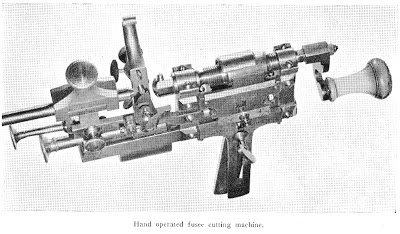
Near the center of the bed may be seen the tool carrier and the earn which serves to regulate the diameter being turned. The tool is moved longitudinally by a lever system connected to the hand driven lead screw on the spindle. The wing nut on the projecting bar at the lower right serves as a fulcrum for the lever which moves the tool. By raising or lowering it the pitch of the fusee is altered.
The modern horologist, in spite of his superior equipment and knowledge, must recognize the ingenuity and skill exhibited in this old tool. We are indebted to J es Hansen of Denver, Colorado for the opportunity to photograph it.
Very few modern horologists will recognize the tool illustrated here. Some of the old timers may perhaps remember having seen a fusee cutting tool.

Near the center of the bed may be seen the tool carrier and the earn which serves to regulate the diameter being turned. The tool is moved longitudinally by a lever system connected to the hand driven lead screw on the spindle. The wing nut on the projecting bar at the lower right serves as a fulcrum for the lever which moves the tool. By raising or lowering it the pitch of the fusee is altered.
The modern horologist, in spite of his superior equipment and knowledge, must recognize the ingenuity and skill exhibited in this old tool. We are indebted to J es Hansen of Denver, Colorado for the opportunity to photograph it.
No comments:
Post a Comment