This website is for information, tips, odds and ends, and thoughts on vintage watches and watchmaking. Expect to see a mostly content here regarding Elgin National and other American makes. That's the area where I focus most of my attention.
I'm not sure of the best way to present things like this (ordinary web site? Blog? Online document?). There are a lot of choices these days so I may use more than one now and then, to see what works best.
Anyway, to get started, here is some information on watch crystal codes.
* * *

Watch crystals are categorized using a cryptic code of letters and numbers the meanings of which may seem completely arbitrary at first. It may surprise some, but there are actually meanings to these codes.
Firstly, the basic shape of the crystal is given by a letter. The following letters are used in one common code system, used for G-S
Flexo crystals.
| S | Square |
| R | Rectangular with cut corners |
| T | "Tonneau", two straight, parallel sides (short) the other two (long) convex |
| Q | Square with cut corners |
| C | "Cushion", four convex sides |
| D | Diamond or an elongated octagon |
| N | Octagon |
| O | Oval |
| H | Hexagonal |
| W | "fancy" barrel-shaped |
| Q | Square, cut corners |
| V | "Rococco", concave corners |
| Y | Similar to T but with convex short sides instead of long sides |
| Z | Rectangular with concave sides |
| H | Round |
| F | "Fancy" - any other shape, generally irregular such as hearts |
These letters designations on their own refer to flat crystals. Crystals fitting a curved watch use an 'M' in front of the above letter. A 'C' in front the 'M' and the shape code indicates a "cylinder" crystal. Cylinder crystals are formed such that their thickness is even from end to end, making them "hollow" in the back. This allows extra space for the watch hands while the top follows the shape of the watch, usually curved. A cylinder designation with a flat crystal (non-'M') does not make sense.
These letters (one, two or there) are followed by a number indicating the specific crystal.
Here's a few examples:
MT2005 - A tonneau crystal, not flat but curved, number 2005
MS1975 - A square crystal, curved, number 1975
CMS2050 - A Square crystal, curved, and cylinder
There are a few other labels, types and designators found on watch crystals such as "Durex", which is a extra thick. Also, lines of plastic crystals ("unbreakable") frequently prefix a 'P' to the entire code. Watch-Craft and Rock-Craft are quite common crystals these days, but they use shape codes different from the above.
This is not the only crystal designation system. Many manufacturers used their own systems which were either completely different, or included additional shape codes. This is inconvenient, but to me it is one of the fascinating things about vintage watches. These systems where early attempts at standardizations that we take for granted today. The systems are cryptic because they were created in a time long before computers. At that time, having any system at all was a major selling point for watch companies, watch parts houses and suppliers ("jobbers").
Finding the right crystal for a particular watch can still be a challenge even with this system. But that's another topic...
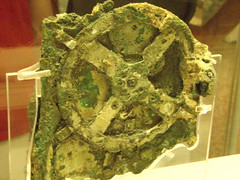 Image by orngejuglr via Flickrhttp://www.youtube.com/watch?v=4eUibFQKJqI
![Reblog this post [with Zemanta]](http://img.zemanta.com/reblog_e.png?x-id=d77aa23e-281a-4183-a4b0-4018b9bdff31)


![Reblog this post [with Zemanta]](http://img.zemanta.com/reblog_e.png?x-id=99faa986-d610-4dcc-b81a-6784e555afb4)

![Reblog this post [with Zemanta]](http://img.zemanta.com/reblog_e.png?x-id=64df846d-038d-46a4-a8f4-19fc7d65bb97)

![Reblog this post [with Zemanta]](http://img.zemanta.com/reblog_e.png?x-id=7f774779-d399-4925-8df5-ca0319e1d731)


![Reblog this post [with Zemanta]](http://img.zemanta.com/reblog_e.png?x-id=e48d3337-82e4-4aba-a5c0-abc86f20f783)


![Reblog this post [with Zemanta]](http://img.zemanta.com/reblog_e.png?x-id=33b8d796-5cb5-45a2-aca0-2392fc0659c1)


